


Superior Results. Delivered.
Blog

Stepped-Up Basis of Inherited Property
If you’re planning your estate, or you’ve recently inherited assets, you may be unsure of the “cost” (or “basis”) for tax purposes. Generaly, there is a stepped-up basis of inherited property. Fair market value rules Under the fair market value basis rules (also known as the “step-up and step-down” rules), an heir receives a basis [...]

Are Scholarships Tax-Free or Taxable?
COVID-19 is changing the landscape for many schools this fall. But many children and young adults are going back, even if it’s just for online learning, and some parents will be facing tuition bills. If your child has been awarded a scholarship, you might be wondering . . . are scholarships tax-free or taxable? Scholarships [...]

Back-to-School Tax Breaks
Despite the COVID-19 pandemic, students are going back to school this fall, either remotely, in-person or under a hybrid schedule. In any event, parents may be eligible for certain back-to-school tax breaks to help defray the cost of education. Here is a summary of some of the tax breaks available for education. (1) Higher Education [...]

How Fraudsters Steal Unemployment Benefits
When Congress authorized an additional $600 in monthly unemployment benefits as part of the CARES Act, out-of-work Americans weren’t the only ones it helped. Criminals have descended like locusts on state unemployment insurance agencies. How fraudsters steal unemployment benefits is by using stolen identities to fraudulently claim both standard benefits and the additional funds administered [...]

Why is Partner Taxable Income Different than Cash Received
If you’re a partner in a business, you may have come across a situation that gave you pause. In a given year, you may be taxed on more partnership income than was distributed to you from the partnership in which you’re a partner. Why is partner taxable income different than cash received? The answer lies in [...]

Bartering is a Taxable Transaction
During the COVID-19 pandemic, many small businesses are strapped for cash. They may find it beneficial to barter for goods and services instead of paying cash for them. If your business gets involved in bartering, remember that the fair market value of goods that you receive in bartering is taxable income. And if you exchange [...]

Protect Customer Data When Working Virtually
With cyberthieves active during COVID-19, the Internal Revenue Service and its Security Summit partners today urged tax professionals and other business owners to review critical security steps to ensure they protect customer data when working virtually. Many tax professionals and other businesses have expanded telework options this year as firms and other businesses work to [...]

Crime Has Adapted to COVID-19
Unlike some legitimate businesses, organized crime enterprises can be expected to weather the current COVID-19 crisis. In fact, with millions of Americans now working from home, organized crime-related cyber fraud — including phishing schemes and ransomware attacks — has grown exponentially. Organized crime has adapted to COVID-19. If you haven’t done so recently, it’s important [...]

Make Sure Your Withholding is Adequate
Did you recently file your federal tax return and were surprised to find you owed money? Make sure your withholding is adequate so that this doesn’t happen next year. You might even want to do that if you got a big refund. Receiving a tax refund essentially means you’re giving the government an interest-free loan. [...]

Possible Tax Consequences of PPP Loans
If your business was fortunate enough to have applied for, and received a loan under the Paycheck Protection Program (PPP) in connection with the COVID-19 crisis, you should be aware of the possible tax consequences of PPP loans. PPP basics The Coronavirus Aid, Relief and Economic Security (CARES) Act, which was enacted on March 27, [...]

What the Payroll Tax Deferral Means for Your Business
On August 8, 2020, President Trump signed four executive actions, including a Presidential Memorandum to defer the employee’s portion of Social Security taxes for some people. These actions were taken in an effort to offer more relief due to the COVID-19 pandemic. The action only defers the taxes, which means they’ll have to be paid in [...]

IRS Issues Fact Sheet on Reportable >$10,000 Cash Transactions
(Image copyright belongs to Serge Averbukh) In Fact Sheet 2020-11, the IRS has presented a series of examples where a person might have to file Form 8300, Report of Cash Payments Over $10,000 Received in a Trade or Business. Background Generally, any person in a trade or business who receives more than $10,000 in cash [...]

New FAQs Address PPP Loan Forgiveness Issues
The U.S. Small Business Administration (SBA), in consultation with the Department of the Treasury, released guidance on 8/4/2020 answering 23 frequently asked questions (FAQs) regarding the forgiveness of Paycheck Protection Program (PPP) loans. The PPP Loan Forgiveness FAQs, published in a new 10-page document, are divided into the following four sections addressing different aspects of [...]
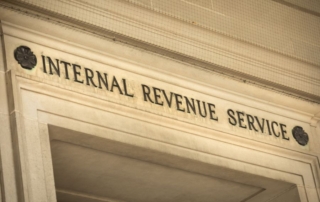
IRS Reveals the “Dirty Dozen” Tax Scams for 2020
(As posted to IRS.gov on 7/16/20) Via IR-2020-160, the Internal Revenue Service today announced its annual "Dirty Dozen" list of tax scams for 2020 with a special emphasis on aggressive and evolving schemes related to coronavirus tax relief, including Economic Impact Payments. This year, the Dirty Dozen focuses on scams that target taxpayers. The criminals [...]

How Some “Reputable” Professionals Enable Illegal Opioid Distribution
With COVID-19 still raging in much of the country, the opioid crisis may not be the top public health challenge on most Americans’ minds. But according to the American Medical Association, the pandemic has led to an increased number of opioid-related deaths in 35 states. It’s not just drug dealers, street gang members and habitual criminals [...]
Disclaimer
This blog is designed to provide competent and reliable information regarding the subject matter covered. However, it is being provided with the understanding that the blogmaster is not engaged in rendering investment advice. Laws and practices often vary from state to state and if investment assistance is required, the services of a licensed investment professional should be sought. The blogmaster resolutely encourages the reader/viewer to do their own research and due diligence before acting on any information contained herein. As such, Roger Rossmeisl specifically disclaims any liability that is incurred from the use or application of the contents of this blog. It should also be noted that the views contained in this blog are not necessarily representative of the opinions/beliefs of the other owners, management and/or employees of Kho & Patel CPAs.


