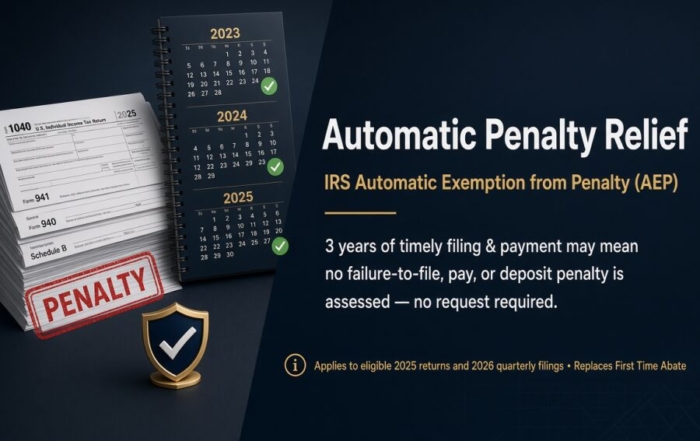

Numerous Tax Limits Affecting Businesses Have Increased for 2022
Many tax limits that affect businesses are annually indexed for inflation, and a number of them have increased for 2022. Here’s a rundown of those that may be important to you and your business.
Social Security tax
The amount of an employee’s earnings that is subject to Social Security tax is capped for 2022 at $147,000 (up from $142,800 in 2021).
Deductions
- Standard business mileage rate, per mile: 58.5 cents (up from 56 cents in 2021)
- Section 179 expensing:
- Limit: $1.08 million (up from $1.05 million in 2021)
- Phaseout: $2.7 million (up from $2.62 million)
- Income-based phase-out for certain limits on the Sec. 199A qualified business income deduction begins at:
- Married filing jointly: $340,100 (up from $329,800 in 2021)
- Single filers: $170,050 (up from $164,900)
Business meals
In 2022 and 2021, the deduction for eligible business-related food and beverage expenses provided by a restaurant is 100% (up from 50% in 2020).
Retirement plans
- Employee contributions to 401(k) plans: $20,500 (up from $19,500 in 2021)
- Catch-up contributions to 401(k) plans: $6,500 (unchanged)
- Employee contributions to SIMPLEs: $14,000 (up from $13,500)
- Catch-up contributions to SIMPLEs: $3,000 (unchanged)
- Combined employer/employee contributions to defined contribution plans: $61,000 (up from $58,000)
- Maximum compensation used to determine contributions: $305,000 (up from $290,000)
- Annual limit for defined benefit plans: $245,000 (up from $230,000)
- Compensation defining a highly compensated employee: $135,000 (up from $130,000)
- Compensation defining a “key” employee: $200,000 (up from $185,000)
Other employee benefits
- Qualified transportation fringe-benefits employee income exclusion: $280 per month (up from $270 per month)
- Health Savings Account contributions:
- Individual coverage: $3,650 (up from $3,600)
- Family coverage: $7,300 (up from $7,200)
- Catch-up contribution: $1,000 (unchanged)
- Health care Flexible Spending Account contributions: $2,850 (up from $2,750)
These are only some of the tax limits that may affect your business and additional rules may apply. Contact us if you have questions.
(This is Blog Post #1162)
Related Posts





About the Author: Roger Rossmeisl, CPA

Roger Rossmeisl, CPA, brings over 40 years of experience helping small business owners who have outgrown their current CPA firm and larger companies seeking responsive, cost-effective solutions they’re not receiving from their current CPA Firm. He goes beyond tax compliance, explaining the “why” behind the numbers and their impact on cash flow and other decision making.
An avid follower of federal monetary policy, Roger adds insight into how government actions affect business and wealth. With a niche in franchised new vehicle dealerships, he has served over 100 franchise stores and groups through decades of evolving IRS rules and legislation.