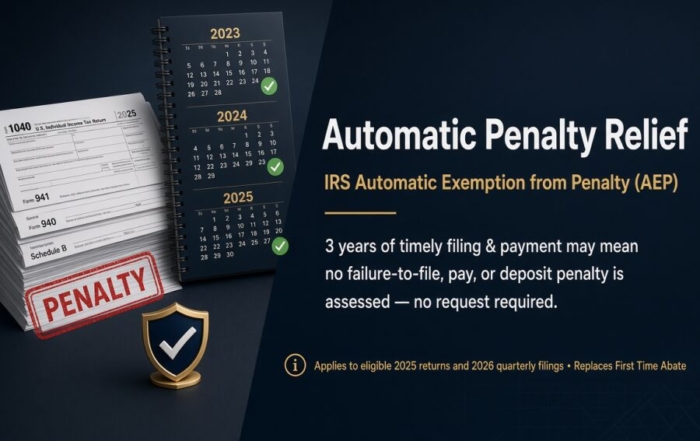

Important 2026 Tax Figures for Businesses
A new year brings many new tax-related figures for businesses. Here’s an overview of key figures for 2026. Be aware that exceptions or additional rules or limits may apply.
Depreciation-related tax breaks
- Bonus depreciation: 100%
- Section 179 expensing limit: $2.56 million
- Section 179 phaseout threshold: $4.09 million
Qualified retirement plan limits
- 401(k), 403(b) and 457 plan deferrals: $24,500
- 401(k), 403(b) and 457 plan catch-up contributions for those age 50 or older: $8,000
- 401(k), 403(b) and 457 plan additional catch-up contributions for those age 60, 61, 62 or 63: $3,250
- SIMPLE deferrals: $17,000
- SIMPLE catch-up contributions for those age 50 or older: $4,000
- SIMPLE additional catch-up contributions for those age 60, 61, 62 or 63: $1,250
- Contributions to defined contribution plans: $72,000
- Annual benefit limit for defined benefit plans: $290,000
- Compensation defining highly compensated employee: $160,000
- Compensation defining key employee (officer) in a top-heavy plan: $235,000
- Compensation triggering Simplified Employee Pension contribution requirement: $800
Other benefits limits
- Health Savings Account (HSA) contributions: $4,400 for individuals, $8,750 for family coverage
- Health Flexible Spending Account (FSA) contributions: $3,400
- Health FSA rollover: $680
- Child and dependent care FSA contributions: $7,500
- Employer contributions to Trump account: $2,500
- Monthly commuter highway vehicle and transit pass: $340
- Monthly qualified parking: $340
Miscellaneous business-related limits
- Income range over which the Section 199A qualified business income deduction limitations phase in: $201,750 – $276,750 (double those amounts for married couples filing jointly)
- Threshold for the excess business loss limitation: $256,000 (double that amount for joint filers) — note that this is a reduction from 2025
- Limitation on the use of the cash method of accounting: $32 million (also affects other tax items, such as the exemption from the 30% interest expense deduction limit)
(This is Blog Post #1875)
Related Posts





About the Author: Roger Rossmeisl, CPA

Roger Rossmeisl, CPA, brings over 40 years of experience helping small business owners who have outgrown their current CPA firm and larger companies seeking responsive, cost-effective solutions they’re not receiving from their current CPA Firm. He goes beyond tax compliance, explaining the “why” behind the numbers and their impact on cash flow and other decision making.
An avid follower of federal monetary policy, Roger adds insight into how government actions affect business and wealth. With a niche in franchised new vehicle dealerships, he has served over 100 franchise stores and groups through decades of evolving IRS rules and legislation.