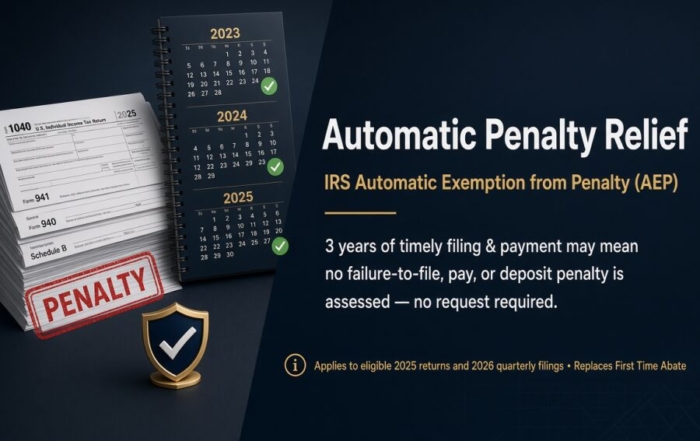

A New Year Means New Tax Figures for Individuals
Many tax figures are annually adjusted for inflation and typically increase each year (or at least every few years). For 2026, some additional changes are going into effect under the One Big Beautiful Bill Act, signed into law July 4, 2025. Here’s an overview of some important limits and other tax figures for 2026. Keep in mind that exceptions or additional rules or limits may apply.
Standard deduction
- Single and married filing separately: $16,100
- Head of household: $24,150
- Married couples filing jointly: $32,200
- Additional standard deduction for those age 65 or older and/or blind: $2,050 ($1,650 per spouse if married). For taxpayers both 65 or older and blind, the additional deduction is doubled.
Itemized deduction limits
- Casualty loss deduction: only for eligible losses from federally or (new for 2026) state-declared disasters
- Charitable deduction floor (new for 2026): 0.5% of adjusted gross income (AGI)
- Mortgage interest deduction: interest on qualified debt up to $750,000
- Medical expense deduction floor: 7.5% of AGI
- State and local tax deduction: $40,400
- Overall limit for higher-income taxpayers (new for 2026): Generally, the tax benefit from itemized deductions for taxpayers in the 37% bracket will be as if they were in the 35% bracket
Retirement plan limits
- Traditional and Roth IRA contributions: $7,500
- Traditional and Roth IRA catch-up contributions for those age 50 or older: $1,100
- 401(k), 403(b) and 457 plan deferrals: $24,500
- 401(k), 403(b) and 457 plan catch-up contributions for those age 50 or older: $8,000
- 401(k), 403(b) and 457 plan additional catch-up contributions for those age 60, 61, 62 or 63: $3,250
- SIMPLE deferrals: $17,000
- SIMPLE catch-up contributions for those age 50 or older: $4,000
- SIMPLE additional catch-up contributions for those age 60, 61, 62 or 63: $1,250
- Contributions to defined contribution plans: $72,000
- Annual benefit limit for defined benefit plans: $290,000
Other tax-advantaged savings limits
- Health Savings Account (HSA) contributions: $4,400 for individuals, $8,750 for family coverage
- Health Flexible Spending Account (FSA) contributions: $3,400
- Child and dependent care FSA contributions: $7,500
- Trump account contributions: $5,000
Estate planning
- Gift and estate tax exemption: $15 million
- Generation-skipping transfer tax exemption: $15 million
- Annual gift tax exclusion: $19,000 (unchanged from 2025)
(This is Blog Post #1877)
Related Posts





About the Author: Roger Rossmeisl, CPA

Roger Rossmeisl, CPA, brings over 40 years of experience helping small business owners who have outgrown their current CPA firm and larger companies seeking responsive, cost-effective solutions they’re not receiving from their current CPA Firm. He goes beyond tax compliance, explaining the “why” behind the numbers and their impact on cash flow and other decision making.
An avid follower of federal monetary policy, Roger adds insight into how government actions affect business and wealth. With a niche in franchised new vehicle dealerships, he has served over 100 franchise stores and groups through decades of evolving IRS rules and legislation.