
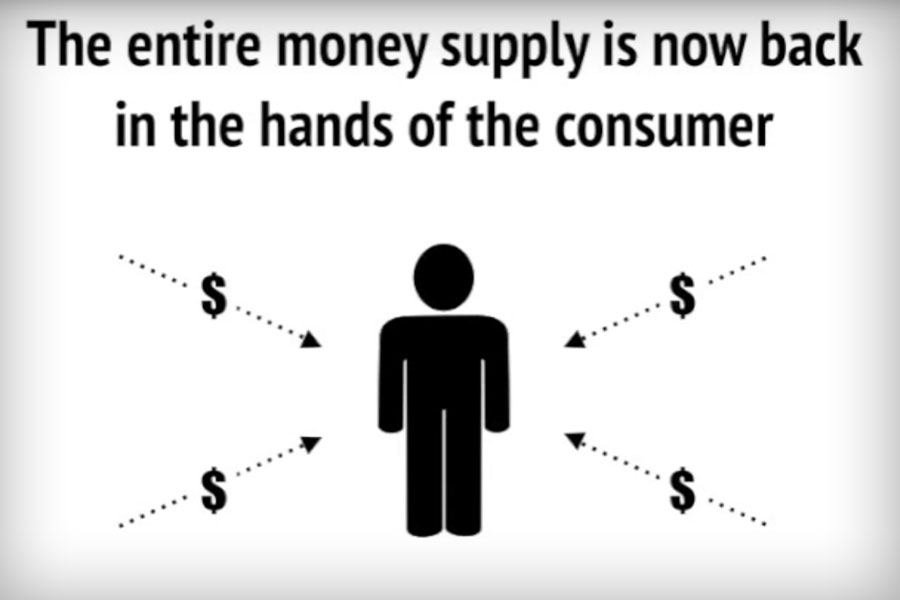
(#234) The Business Cycle in 5 Minutes
An explanation of the current state of the economy
As appearing on the libertyordeath TV’s YouTube Channel
Business cycle theory is an economic theory developed by the Austrian School of economics about how business cycles occur. The theory views business cycles as the consequence of excessive growth in bank credit, due to artificially low interest rates set by a central bank or fractional reserve banks. The Austrian business cycle theory originated in the work of Austrian School economists Ludwig von Mises and Friedrich Hayek. Hayek won the Nobel Prize in economics in 1974 (shared with Gunnar Myrdal) in part for his work on this theory.
Proponents believe that a sustained period of low interest rates and excessive credit creation result in a volatile and unstable imbalance between saving and investment. According to the theory, the business cycle unfolds in the following way: low interest rates tend to stimulate borrowing from the banking system. This leads to an increase in capital spending funded by newly issued bank credit. Proponents hold that a credit-sourced boom results in widespread malinvestment. A correction or “credit crunch” – commonly called a “recession” or “bust” – occurs when the credit creation has run its course. Then the money supply contracts (or its growth slows) causing a curative recession and eventually allowing resources to be reallocated back towards their former uses.
Related Posts





About the Author: Roger Rossmeisl, CPA