


Payroll and Tax Implications of OBBBA 2025

Courtesy of Thomson Reuters (07/10/25) On July 4, 2025, the One Big Beautiful Bill Act (OBBBA) was signed into law, enacting significant changes to federal tax and payroll law. The Act extends several provisions from the Tax Cuts and Jobs Act (TCJA) and introduces new deductions, credits, and compliance requirements that will affect your payroll operations, employee benefits, and tax reporting obligations. To help you navigate these changes, the following chart summarizes the most relevant payroll-related provisions, including effective dates and Internal Revenue Code (IRC) references. Summary of Key Payroll-Related Provisions Act § IRC § Provision Summary of Δs Effective §70101 §1(j) Extension and enhancement of reduced rates Permanently extends lower individual income tax rate brackets originally enacted under TCJA Taxable years starting after Dec. 31, 2025 §70102 §63(c) Extension and enhancement of increased standard deduction Permanently...


No Tax on Car Loan Interest Under OBBBA 2025? Not Exactly

Under current federal income tax rules, so-called personal interest expense generally can’t be deducted. One big exception is qualified residence interest or home mortgage interest, which can be deducted, subject to some limitations, if you itemize deductions on your tax return. The One Big Beautiful Bill Act (OBBBA) adds another exception for eligible car loan interest. In tax law language, the new deduction is called qualified passenger vehicle loan interest. Are you eligible? Here are the rules. “No tax” isn’t an accurate description If you could deduct all your car loan interest, you’d be paying it with pre-tax dollars rather than with post-tax dollars — meaning after you paid your federal income tax bill. The new deduction has been called “no tax on car loan interest,” but...

Act Soon: OBBBA 2025 Ends Clean Energy Tax Breaks

The newly enacted One, Big, Beautiful Bill Act (OBBBA) represents a major move by President Trump and congressional Republicans to roll back a number of clean energy tax incentives originally introduced or expanded under the Inflation Reduction Act (IRA). Below is a summary of the key individual tax credits that will soon be scaled back or eliminated. Clean vehicle tax credits If you’re planning to buy a clean vehicle, consider acting soon to take advantage of expiring tax benefits: New clean vehicle credit. This credit offers up to $7,500 for qualifying new electric and fuel cell vehicles, depending on how the battery components and critical minerals are sourced. Vehicles that meet only one of the sourcing criteria may be eligible for a reduced $3,750 credit. Originally set to...

OBBBA 2025 Includes a Game-Changer for Business Payment Reporting

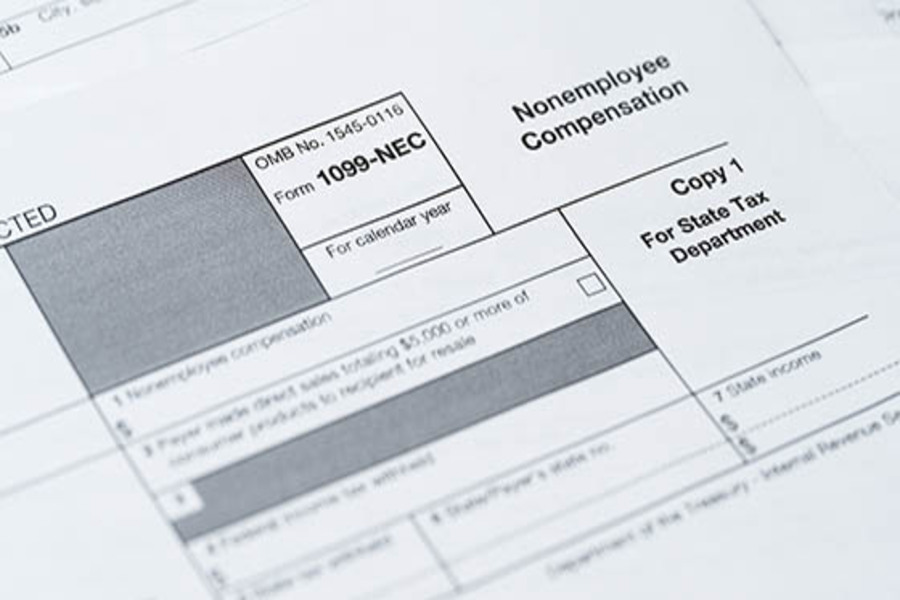
The One, Big Beautiful Bill Act (OBBBA) contains a major overhaul to an outdated IRS requirement. Beginning with payments made in 2026, the new law raises the threshold for information reporting on certain business payments from $600 to $2,000. Beginning in 2027, the threshold amount will be adjusted for inflation. The current requirement: $600 threshold For decades, the IRS has required that businesses file Form 1099-NEC (previously 1099-MISC) for payments made to independent contractors that exceed $600 in a calendar year. This threshold amount has remained unchanged since the 1950s! The same $600 threshold is in place for Forms 1099-MISC, which businesses file for several types of payments, including prizes, rents and payments to attorneys. Certain deadlines must be met. A Form 1099-NEC must be filed with the IRS...

Factoring OBBBA 2025 into a Business Valuation

Several provisions of the One, Big, Beautiful Bill Act (OBBBA) — enacted on July 4, 2025 — alter the tax rules for businesses. The new law generally extends and expands many provisions of the Tax Cuts and Jobs Act of 2018 (TCJA). If Congress hadn’t passed the OBBBA, many temporary TCJA provisions would have expired. Not all the OBBBA changes are favorable to business owners, and the effects of the new law will vary from business to business. But one thing is certain: Valuation professionals will need to consider the new law when they estimate the value of business interests. Here are four key changes that could affect an equity investor’s expected cash flows and a company’s cost of capital: Extension and expansion of the QBI...

What You Still Need to Know About the Alternative Minimum Tax After the New Tax Law

The alternative minimum tax (AMT) is a separate federal income tax system that bears some resemblance to the regular federal income tax system. The difference is that the individual AMT system taxes certain types of income that are tax-free under the regular system. It also disallows some deductions that are allowed under the regular system. If the AMT exceeds your regular tax bill, you owe the larger AMT amount. Tax law changes The Tax Cuts and Jobs Act (TCJA) made the individual alternative minimum tax (AMT) rules more taxpayer-friendly for 2018-2025 and significantly reduced the odds that you’ll owe the AMT for those years. But the new One Big Beautiful Bill Act (OBBBA) contains mixed news about your AMT exposure. AMT rates The maximum AMT rate is “only” 28%...

The QBI Deduction and What's New in OBBBA 2025

The qualified business income (QBI) deduction, which became effective in 2018, is a significant tax benefit for many business owners. It allows eligible taxpayers to deduct up to 20% of QBI, not to exceed 20% of taxable income. It can also be claimed for up to 20% of income from qualified real estate investment trust dividends. With recent changes under the One, Big, Beautiful Bill Act (OBBBA), this powerful deduction is becoming more accessible and beneficial. Most important, the OBBBA makes the QBI deduction permanent. It had been scheduled to end on December 31, 2025. A closer look QBI is generally defined as the net amount of qualified income, gain, deduction and loss from a qualified U.S. trade or business. Taxpayers eligible for the deduction include sole proprietors and...

What Families Need to Know About OBBBA 2025

The One, Big, Beautiful Bill Act (OBBBA) has introduced significant tax changes that could affect families across the country. While many of the provisions aim to provide financial relief, the new rules can be complex. Below is an overview of the key changes. Adoption credit enhanced Parents who adopt may be eligible for more generous tax relief. Under current law, a tax credit of up to $17,280 is available for the costs of adoption in 2025. The credit begins to phase out in 2025 for taxpayers with modified adjusted gross income (MAGI) of $259,190 and is eliminated for those with MAGI of $299,190 or more. If you qualify, the adoption credit can reduce your tax liability on a dollar-for-dollar basis. This is much more valuable than a deduction,...

OBBBA Includes Favorable Changes for Depreciating Eligible Assets

The One Big Beautiful Bill Act (OBBBA) includes a number of beneficial changes that will help small business taxpayers. Perhaps the biggest and best changes are liberalized rules for depreciating business assets. Here’s what you need to know. 100% bonus depreciation is back The new law permanently restores 100% first-year depreciation for eligible assets acquired and placed in service after January 19, 2025. The last time 100% bonus depreciation was allowed for eligible assets was in 2022. The deduction percentage was generally reduced to 80% for 2023, 60% for 2024, and 40% for eligible assets placed in service between January 1, 2025, and January 19, 2025. For certain assets with longer production periods, these percentage cutbacks were delayed by one year. For example, a 60% first-year...

What the New Tax Law Could Mean for You

As 2025 began, individual taxpayers faced uncertainty with several key provisions of the tax law that were set to expire at the end of the year. That changed on July 4, when President Trump signed the One, Big, Beautiful Bill Act (OBBBA) into law. The OBBBA not only makes many TCJA provisions permanent but also introduces several new benefits — although some other tax breaks have been removed. Below is a summary of eight areas with changes that may impact you and your family. Child tax credit Starting in 2025, the credit rises to $2,200 per qualifying child under 17 (up from $2,000). The refundable portion is set at $1,700 in 2025 and adjusted for inflation thereafter. Phaseouts begin at $200,000 for single taxpayers and...